Rethinking of the Gathering Space - Student Lounge, USM

A strategy for the inclusive public environment. What can we learn from the cities, and how can interior urbanism shape our habitable environments in the future?
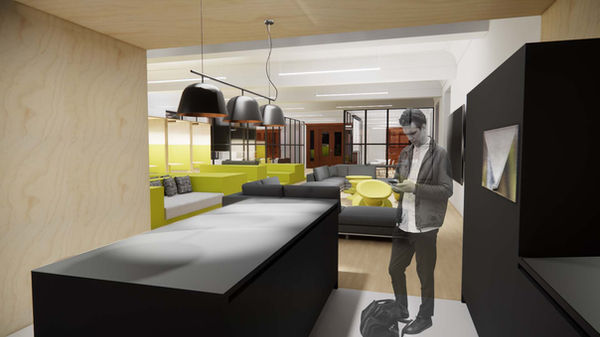
This adaptive reuse project transforms a former campus dining hall into a multifunctional student lounge through spatial strategies that prioritize flexibility, inclusivity, and long-term adaptability. The design recognizes the latent capacity of the existing structure to support new patterns of use and social life, reimagining the site as a place for communal gathering, informal learning, and leisure activity. The reprogrammed space includes a range of environments: dedicated study booths, an entertainment zone anchored by a ping-pong table, two small classrooms, and a community kitchen with a large shared table intended for collective cooking and meals. At the center of the project is a modular structure composed of interlocking plywood volumes at varying heights. This “playful topography” serves as a spatial and social infrastructure accommodating a spectrum of informal postures, from reclining and perching to active play and conversation. All interventions are conceived as reversible and non-invasive. Furniture and spatial modules are entirely freestanding and unattached to walls or floors, allowing the space to adapt over time without demolition or waste. This approach reflects a regenerative ethic in architectural practice: one that resists permanence in favor of ongoing negotiation between material form, programmatic needs, and collective inhabitation.